

July 19th, 2019, Friday. Today marks the 200th day of the year, or 54.795% for the mathematically inclined and the ocd.
500px
As mentioned in a previous post, Flickr has changed their user policy ever since being bought over by Smugmug, destroying the popular 1TB free storage plan which was a dream come true for amateur hobbyist photographers on a budget. The rationale was to improve Flickr from its current photo dumping ground into a better photo sharing site where photographers can present their best works instead of being bombarded by a torrent of subpar photographs, which is the unintended consequence of having “unlimited free storage”.

However, since the acquisition, users do not seem to be too pleased with Flickr (read: Flickr users furious as critical issues still plague the platform following Yahoo transition). Since the announcement of Flickr’s acquisition, I stopped using the service and switched over to Google Photos for archival, albeit the unfortunate compression for unlimited storage.
Enter 500px. I joined the site several years back but decided to stay with Flickr due to 500px’s weekly upload limit for free accounts. In light of the new developments for online photo sharing sites, 500px appears to be the best choice for my needs. The only drawbacks compared to Flickr is the reduced upload count and the incompatibility of the lightbox plugin I use with 500px. Photo metadata also cannot be transferred over to 500px, hence it can be regarded as a permanent loss.
Wearing Green
The annual short holiday to a resort took place earlier this month. I had mixed feelings this time, on one hand literally no one ones to join this holiday but on the other hand, its a new resort and I had a goal to achieve. Skipping all the hush hush details, this holiday proved to be a worthwhile one. Got to meet up with old friends and managed to secure that elusive ippt gold for the first time in my life after missing it by one point last year.

I always thought that consistent training was required to maintain a certain standard of physical fitness. Not so sure now since I managed to not only run faster but also score higher at statics despite not training for a year and losing muscle mass whilst in Europe. Maybe lighter mass contributes to the faster run time, or maybe the desire to secure the gold momentarily convinced my body to outperform for that day. Either ways, training has to resume to repeat this feat for the coming years.
Stitches
This is the third consecutive year I had stitches during the run. Two years back during the first occurrence, it was so uncomfortably painful I slowed down to walking pace and took over 12 minutes to complete the run. Could you even call it a run if I was walking half the time? The next year, I had a stitch again but it wasn’t as bad as the first time. As a result the run time cut down to low eleven minutes but wasn’t enough to get me to gold territory. This year, I avoided drinking water at all cost. No stitch shall stand between me and my gold. Or so I thought.
When the GO command was given, I sprinted past to crowd only to realise that I was ahead of everyone. Bad idea. I know of a few runners behind me who could easily finish the run in under 10 minutes so either I was starting off too fast or they decided to take it easy this time round. Guess which one was it? I realised my mistake halfway around the lap when the all familiar feeling of a stitch set in once again and heard someone shout out to me “SLOW DOWN, YOU’RE TOO FAST“.

I felt my stamina slowly drain away as each lap passed, but I was determined to get my gold this year. The statics gave me a fighting chance, all I had to do was maintain the same running pace as the previous year. On my last lap, I frantically pointed to my wrist, hoping someone will tell me the time as I wasn’t wearing a wrist watch. “Eight minutes and….”, this isn’t good at all. I had about two minutes to complete the final lap and a stitch to take care of. It doesn’t matter anymore. I summoned all the energy I had and sprinted on, ignoring the stitch as best as I could. The previous eight minutes of hard work is a sunk cost, but it had to be worth something.
Right about the final turn, I began my usual all in strategy, large strides heel running and rapid one in one out breathing. This wasn’t sustainable, but the “turbo” proved to be useful on more than one occasion. As I passed the finishing line and got my running chip, I looked at the number and realised I completed the run as either number 7th or 8th. Judging from the smiles of my friends gathered at the line, I knew at once the answer. The journey to gold wasn’t easy, but it was worth it every step of the way.
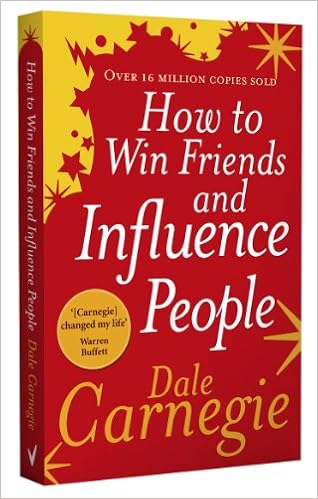
On the long train journeys to and fro work, this book by Dale Carnegie has been a great companion. Whilst the title may seem like a superficial and desperate attempt to gain new friendships, the book actually teaches you how to genuinely be kind and nice to everyone.
I started reading this book in May whilst on the bus and drifted off not soon after. Here are some quotes which I found meaningful from Part 1: “Fundamental Techniques in Handling People”
I consider my ability to arouse enthusiasm among my people the greatest asset I possess, and the way to develop the best that is in a person is by appreciation and encouragement.
Charles Schwab
The book uses the story of Charles Schwab, a man paid a fat salary to manage people more knowledgeable than him in the steel industry, because he had the ability to get along well with others.
Praise instead of Criticise
‘There is nothing else that so kills the ambitions of a person as criticisms from superiors. I never criticise anyone. I believe in giving a person incentive to work. So I am anxious to praise but loath to find fault.
Charles Schwab
Consider the quote above. Given the choice of a working for a superior who reigns with terror and one who coaches staff patiently, I believe most people would pick the latter. The former may get their way and win in a conflict but they will not gain the respect and cooperation of those they seek to better. In the long term, for the sake of my sanity and growth, picking a manager like Schwab certainly is the better option. It creates a positive working environment where workers own up to mistakes and learn from them rather than cover it up and hope it all goes away. With an enthusiastic team working together, much more productive work can be done and everyone is better own in many subtle ways.
See the good in people
‘Once I did bad and that I heard ever/Twice I did good, but that I heard never.’
It is common in human nature to criticise and magnify flaws and less common to praise for a job well done or an action done right. Perhaps it has something to do with one’s pride and the need to feel superior to others, putting others down so one feels better about themselves. In my opinion, a fair outcome would be to privately correct one’s “bad” and commend on the “good”. This however, brings up another example I read elsewhere in another book where too much praise leads to an over-reliance and future actions will increasingly be done to earn more of the praise.
Working for incentives

For example, if a child is rewarded with sweets and showered with warm praise everytime they do well for a school test or helps out in the house, the reward becomes the driver for such actions and should the rewards not continue to persist, the child could potentially lose interest in doing so since the incentive has been removed. On the other hand, workers are not children and less likely to be perform well just for the sake of commendation by their superiors.
The evil that men do lives after them; the good is oft interred with their bones
William Shakespeare
If we think back on our own past, are we more likely to remember the bully who snatched our lunchbox during recess and played monkey with it or the brave kid who stood up for us?